
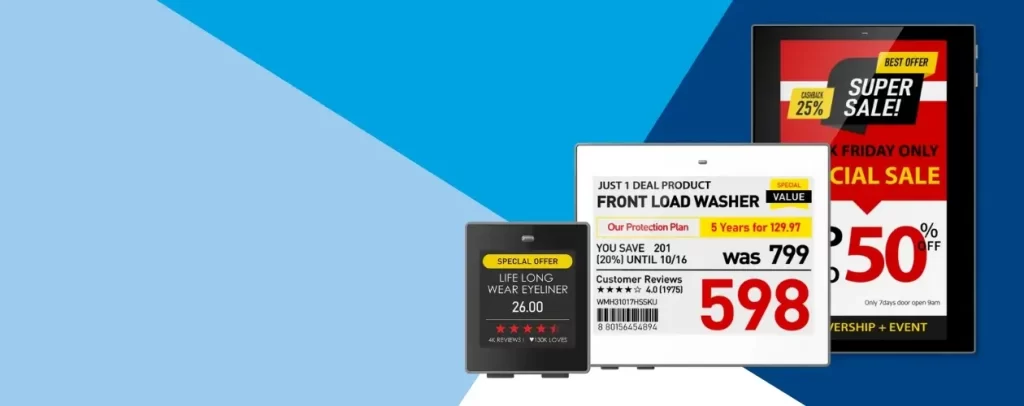
Electronic Shelf Labels (ESLs) redefine retail pricing and information display. Retailers use ESLs to show real-time prices, promotions, and product details on digital displays. These labels improve pricing accuracy, reduce labor costs, and enhance the shopping experience. Retail staff can update prices and product information instantly from a central server, ensuring that customers always see the most current information. ESLs use energy-efficient E-paper displays, which provide clear, readable text and graphics. Retailers benefit from streamlined operations and improved customer engagement through the use of ESL technology.
1. What is an ESL?
An ESL, or Electronic Shelf Label, displays product pricing and information electronically in retail environments.
ESLs connect to a central system through wireless communication, allowing for real-time updates of pricing and product information.
3.What benefits do ESLs offer to retailers?
ESLs provide accurate, real-time pricing updates, reduce labor costs by eliminating manual price changes, and enhance customer experience with clear, consistent information.
4.Can ESLs integrate with existing retail systems?
Yes, ESLs typically integrate with various retail software systems, allowing seamless updates and management.
5.How do ESLs improve customer engagement?
ESLs display dynamic information, promotions, and product details, making it easier for customers to make informed purchasing decisions.
6.What makes ESLs more efficient than traditional paper labels?
ESLs reduce the need for frequent manual updates, lower the risk of pricing errors, and save on printing costs.
7.How easy is it to maintain ESLs?
Maintaining ESLs involves simple tasks like occasional battery replacements and ensuring proper wireless connectivity, making them low-maintenance compared to traditional labels.