
Coding and marking with an inkjet printer is printing essential information like batch numbers and expiry dates on products or packaging. It ensures traceability and compliance in the food, pharmaceutical, and manufacturing industries.
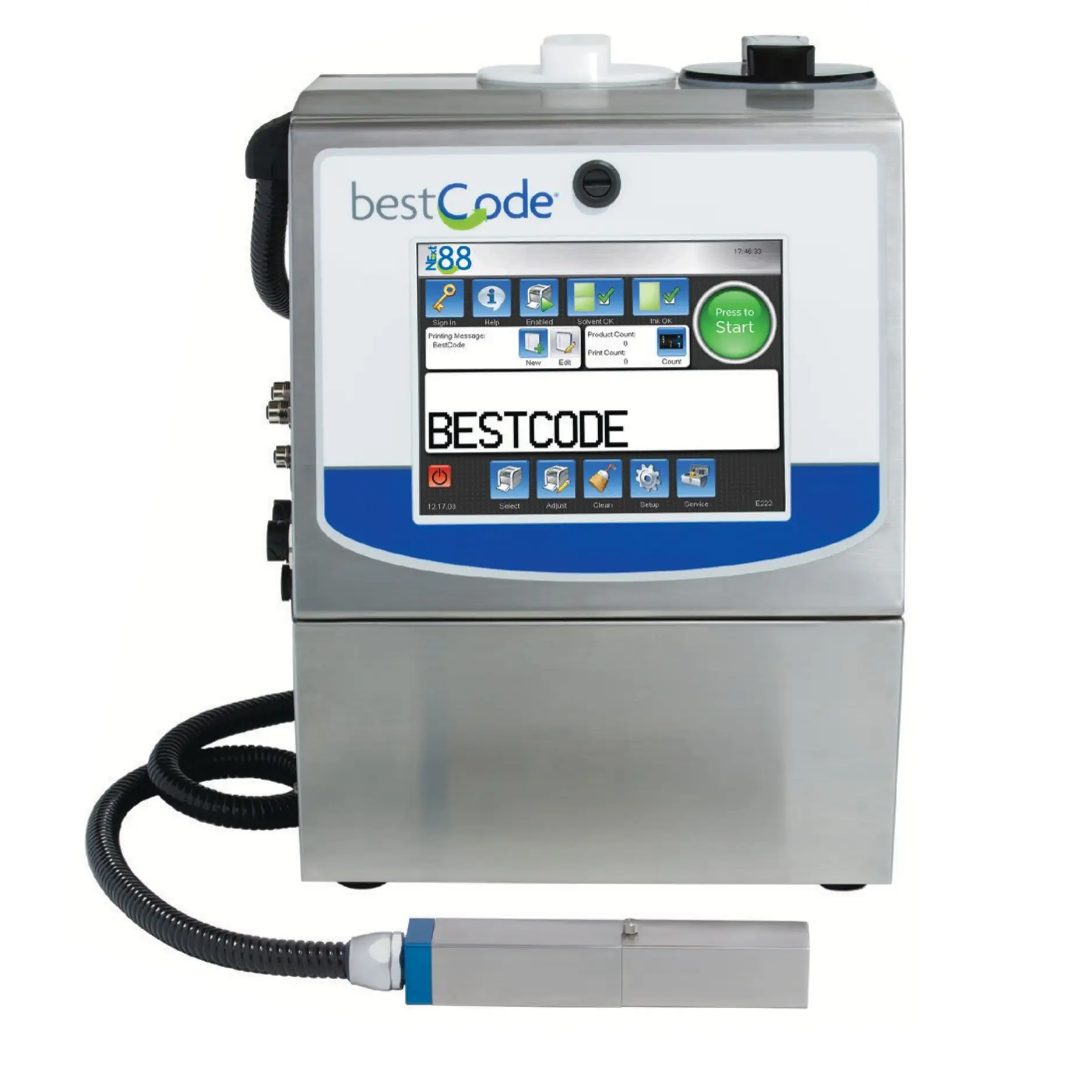
BestCode Model 88 System
FAQ
1. What is coding and marking equipment?
Coding and marking equipment apply information such as dates, batch numbers, barcodes, and logos on products or packaging.
2. What industries use coding and marking equipment?
Industries like food and beverage, pharmaceuticals, cosmetics, electronics, and automotive use coding and marking equipment.
3.How does inkjet printing work in coding and marking?
Inkjet printers spray tiny droplets of ink onto surfaces to create text, graphics, or barcodes. They offer high-speed, non-contact printing.
4.What is an inkjet printer for coding and marking?
An inkjet printer for coding and marking applies identification information directly onto products and packaging. The printer uses ink droplets to print batch numbers, expiration dates, barcodes, and logos.
5.What industries use inkjet coding and marking equipment?
Industries that use inkjet coding and marking equipment include food and beverage, pharmaceuticals, cosmetics, electronics, and automotive. These industries require accurate and reliable product identification.
6.What are the advantages of using inkjet printers for coding and marking?
The advantages of using inkjet printers include high-speed printing capabilities, the ability to print on various surfaces, flexibility in printing different types of information, and minimal downtime due to easy maintenance and quick ink cartridge replacement.
7.How do I maintain an inkjet printer?
Maintaining an inkjet printer involves regularly cleaning the printhead to prevent clogging, replacing ink cartridges or refilling them as needed, performing routine software updates to ensure optimal performance, and following the manufacturer’s maintenance schedule.